
Third-Party Lab Testing: Why It Matters When Choosing CBD
Introduction
Somewhere on almost every CBD product page, you’ll see the phrase “third-party tested.” It sounds reassuring. It’s also, if we’re honest, become a little bit of a throwaway line, printed everywhere, explained almost nowhere.
So what does it actually mean for a lab to be a legitimate third party? Who tests the testers? And does “tested” really tell you anything if you don’t know what standard that lab was held to?
These are fair questions, and ones worth understanding before you trust a label. Let’s look at what’s actually behind that phrase.
What It Is
Third-party lab testing means a CBD product is tested by an independent laboratory, one with no ownership stake or financial relationship with the brand selling the product. That independence is the entire point.
But not every “independent” lab operates the same way. The gold standard in the industry is ISO/IEC 17025 accreditation, an international standard that evaluates a lab’s competence, consistency, and impartiality. Labs accredited to this standard have been independently assessed to confirm they can produce accurate, repeatable results, not just once, but consistently.
In other words, third party tested cbd should mean two things at once: the lab has no financial stake in the outcome, and the lab itself has been vetted to a recognized standard.
Why It Matters
The hemp and cannabis testing industry has a known challenge worth understanding: an inconsistency sometimes called “lab shopping,” where a brand sends samples to multiple labs and selects the results most favorable to their marketing. Because testing methodologies haven’t always been standardized across labs, results for the same product could genuinely differ from one facility to another.
This is exactly why cbd testing standards matter as much as the testing itself. Accreditation bodies like A2LA and ANAB have been pushing the industry toward mandatory ISO/IEC 17025 accreditation specifically to close this gap, so a test result means the same thing no matter which accredited lab produced it.
For you as a shopper, this means the phrase “third-party tested” is a good start, but knowing whether that lab is accredited tells you a lot more.
Main Support Areas
Legitimate hemp cbd lab testing generally covers a few key areas, each protecting a different part of your experience:
Cannabinoid potency. Confirms the CBD (and THC) content matches what the label claims.
Pesticide screening. Checks for chemical residue that may have been used during cultivation.
Heavy metal testing. Hemp is a bioaccumulator, meaning it absorbs whatever is in its soil, so contaminant screening matters more here than in many other crops.
Residual solvent testing. Relevant for products extracted using solvent-based methods, confirming no harmful residue remains.
Microbial testing. Screens for mold, yeast, and bacteria, particularly important for ingestible products.
A lab that only checks potency, without screening for these other categories, is only giving you part of the picture.
Recommended Product Formats
Testing thoroughness matters across every format, though the specific risks shift depending on what you’re using:
- CBD Oils and Tinctures — potency and solvent residue testing matter most here
- Gummies and Capsules — potency accuracy and microbial testing are key, since these are ingested
- Topicals — contaminant screening remains important, since these are absorbed through the skin
- Pet Products — full-panel testing matters even more, given the smaller dosing tolerances for animals
Regardless of format, a complete test panel is what separates a genuinely verified product from one that’s simply labeled that way.
How to Verify CBD Quality
Verifying a product’s quality doesn’t require a background in chemistry. It comes down to checking a few specific things.
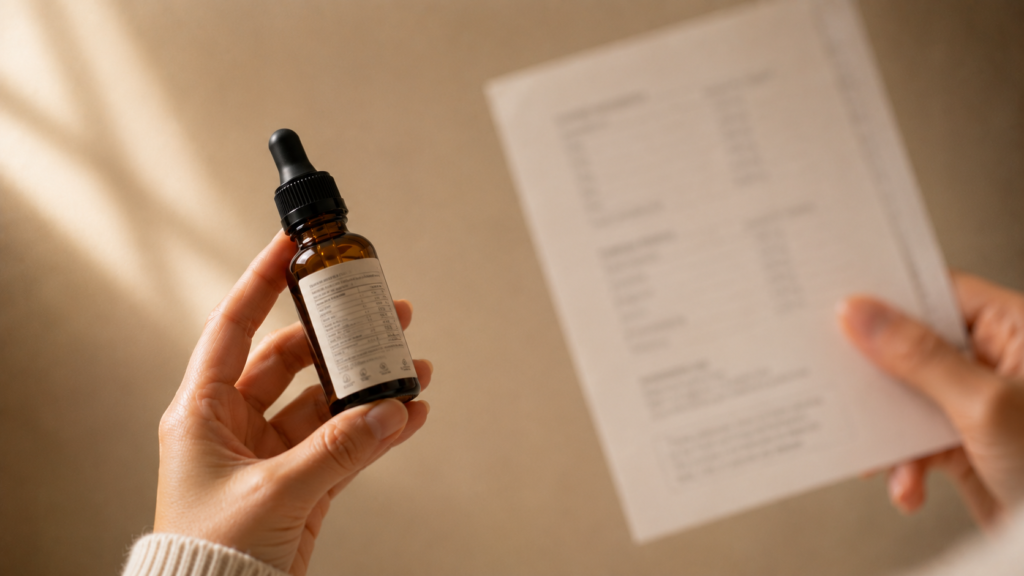
Step 1: Look for a published Certificate of Analysis. This is the actual lab report behind the product, not just a general testing claim.
Step 2: Check who performed the test. A named, identifiable lab is a good sign. A vague “independently tested” claim without a named lab is worth questioning.
Step 3: Look for ISO/IEC 17025 accreditation. This tells you the lab itself has been vetted, not just that testing happened.
Step 4: Confirm the panel covers more than potency. Contaminant screening should be included, not just a cannabinoid count.
Step 5: Match the report to your specific product. The batch number on the COA should match your product’s packaging.
Once you’ve checked these five things, you have a genuinely informed answer to “is my cbd tested,” rather than just trusting a label’s word for it.
Product Types
Testing expectations stay consistent across CBD types, though what shows up on the report will differ:
Full-Spectrum CBD
The cannabinoid panel should show CBD alongside other naturally occurring compounds, plus trace THC confirmed under 0.3%.
Broad-Spectrum CBD
Similar cannabinoid range as full-spectrum, but THC should test as non-detected.
CBD Isolate
The panel should show CBD only, with all other cannabinoids at or near zero.
Regardless of type, the contaminant and microbial sections of the report should look the same in terms of thoroughness.
What to Look for When Buying
A few habits make it much easier to shop for genuinely cbd quality control-backed products:
- A named, accredited lab. ISO/IEC 17025 accreditation is the clearest signal of a rigorous testing process.
- A complete test panel. Potency alone isn’t enough; contaminant and microbial screening should be included.
- Easy access to the COA. A brand confident in its results makes them simple to find.
- Batch-specific reporting. Testing should reflect the specific batch you’re purchasing, not a generic or outdated report.
- Consistency across the product line. The same testing standard should apply to every product, not just a few flagship items.
Every product in our Native Ceuticals catalog is tested with this level of rigor, so the quality claims on the label are backed by something you can actually verify.
Safety & Considerations
Even a thoroughly tested product still calls for a thoughtful approach when you’re trying it.
Start with a lower serving and adjust gradually, especially with a new product. Testing confirms what’s in the bottle, but it doesn’t replace paying attention to how your body responds.
If you’re taking any medications, check with your doctor first, since CBD can interact with certain prescriptions. Pregnant or nursing individuals should also speak with a healthcare provider before use.
Verified testing gives you confidence in the product. Thoughtful use is still what makes the experience a good one.
Final Thoughts
“Third-party tested” is a phrase worth taking seriously, but only once you know what’s actually behind it. A named, accredited lab, a complete test panel, and an accessible report are what turn that phrase from marketing language into something you can genuinely trust.
Once you know what to look for, verifying CBD quality stops being a leap of faith and becomes a quick, practical check, one you can do in a couple of minutes before you buy.
Shop Verified Quality
Ready to shop CBD backed by real, accredited lab testing? Explore isiGude’s collection of Native Ceuticals products, independently tested and transparently documented, batch by batch.
FAQ
What does “third-party tested” actually mean for CBD?
It means an independent lab, with no financial stake in the brand, tested the product. Ideally, that lab is also accredited to a recognized standard like ISO/IEC 17025.
How do I verify CBD quality?
Look for a published Certificate of Analysis, a named and accredited lab, a complete contaminant panel, and a batch number that matches your product.
What is ISO/IEC 17025 accreditation?
It’s an international standard that evaluates a testing lab’s competence and consistency, confirming the lab itself has been independently vetted, not just the products it tests.
Is my CBD tested if the label just says “lab tested”?
Not necessarily in a meaningful way. Look for a named lab and an accessible Certificate of Analysis rather than a general claim alone.
What should a full CBD testing panel include?
A complete panel includes cannabinoid potency, pesticide screening, heavy metal testing, residual solvent testing, and microbial testing.
Sources & Further Reading
- A2LA, Cannabis Testing Laboratory Accreditation Program
- U.S. Food & Drug Administration, FDA Regulation of Cannabis and Cannabis-Derived Products, Including CBD
- National Center for Complementary and Integrative Health, Cannabis (Marijuana) and Cannabinoids: What You Need To Know
Disclaimer
This article is for educational purposes only and is not intended as medical advice. Statements regarding CBD products have not been evaluated by the U.S. Food and Drug Administration. These products are not intended to diagnose, treat, cure, or prevent any disease. Please consult a healthcare professional before adding CBD to your routine, especially if you are pregnant, nursing, taking medication, or have a medical condition.