
Full-Spectrum, Broad-Spectrum, and Isolate — What Each Term Means
Introduction
You’re comparing two CBD products, and the labels look almost identical, except one says “full-spectrum” and the other says “broad-spectrum.” A third bottle nearby just says “isolate.” No further explanation, no context, just three unfamiliar terms standing between you and a decision.
If you’ve paused at that shelf wondering what any of it actually means, you’re asking exactly the right question. These three words describe real, meaningful differences in what’s inside the bottle, not just marketing language.
This guide breaks each one down clearly, so the next time you see these terms, you’ll know exactly what you’re choosing between.
What It Is
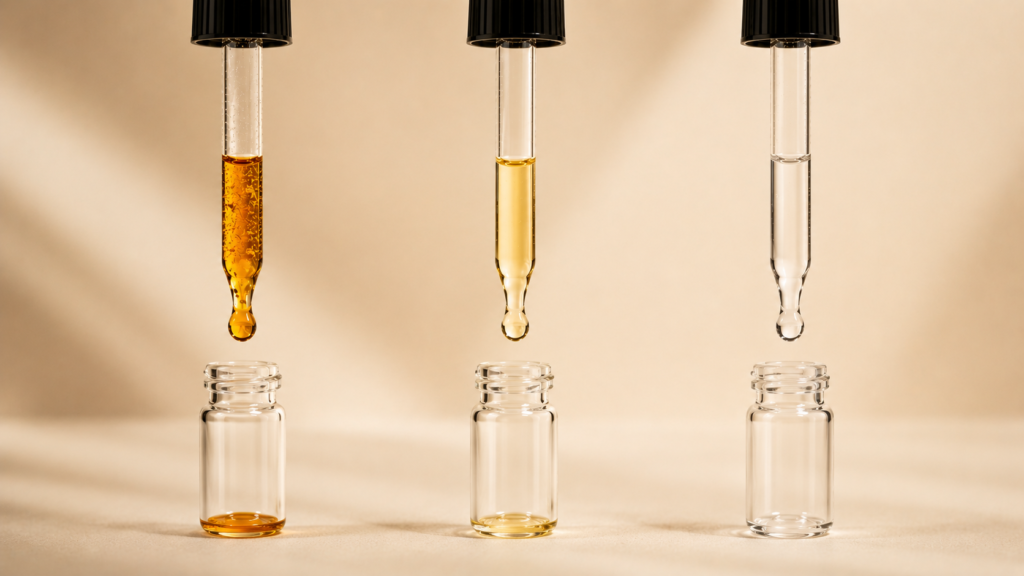
Full-spectrum, broad-spectrum, and isolate all describe how much of the original hemp plant carries through into the final CBD extract. The difference comes down to which compounds are kept and which are removed during processing.
Hemp naturally contains more than just CBD. It also contains other cannabinoids, terpenes, and trace THC. Depending on how a product is made, some, all, or none of these additional compounds remain in the final formula.
That single distinction, how much of the plant stays in the extract, is really the whole story behind these three terms.
Why It Matters
Choosing between full spectrum vs broad spectrum cbd isn’t just a technical detail. It affects what’s actually in the product, whether trace THC is present, and how the formula is generally described in terms of a “whole plant” versus a more isolated experience.
Some people specifically want the full range of natural hemp compounds. Others want to avoid THC entirely, even in trace amounts. Understanding these terms means you can shop based on what actually matters to you, rather than guessing at what the label implies.
It also helps you read a Certificate of Analysis more clearly, since the cannabinoid panel should reflect whichever type you’ve chosen.
Main Differences at a Glance
Here’s how the three types compare on the points that matter most:
THC content. Full-spectrum contains trace THC (under 0.3%). Broad-spectrum has THC removed. Isolate contains no THC at all.
Other cannabinoids. Full-spectrum and broad-spectrum both retain a range of naturally occurring hemp compounds. Isolate contains only CBD.
Terpenes. Full-spectrum and broad-spectrum typically retain natural plant terpenes, which contribute to aroma and flavor. Isolate does not.
Common reason for choosing. Full-spectrum is often chosen for a whole-plant experience. Broad-spectrum appeals to people who want that range of compounds without THC. Isolate suits people who want CBD alone, with nothing else.
Recommended Product Formats
Each CBD type is available across most common formats, so the choice usually comes down to type first, then format:
- CBD Oils and Tinctures — available in all three types, making this the easiest format to compare directly
- Gummies and Capsules — often made with isolate or broad-spectrum, since flavor consistency matters more in these formats
- Topicals — commonly formulated with full-spectrum or broad-spectrum extracts
- Softgels — typically isolate or broad-spectrum, for a clean, consistent formula
If you’re comparing types for the first time, tinctures are often the simplest way to try one and see how it fits your routine.
How It Works (Simple Explanation)
The difference between these three types comes down entirely to the extraction and refinement process.
Full-spectrum extract is the least processed. After the initial extraction, minimal filtering is done, so most of the plant’s natural compounds remain, including trace THC.
Broad-spectrum starts the same way, but goes through an additional step to remove THC specifically, while preserving other cannabinoids and terpenes.
Isolate goes through the most extensive refinement. Every compound except CBD is filtered out, leaving a pure, crystalline form of CBD with nothing else present.
Understanding the Entourage Effect
You may have seen the term “entourage effect” used to describe why some people prefer full-spectrum or broad-spectrum products over isolate.
The idea, first proposed in cannabis research in the late 1990s, suggests that cannabinoids, terpenes, and other plant compounds may work together in ways that differ from how CBD behaves on its own. It’s often used to explain why some people report a different experience with full-spectrum products compared to isolate.
It’s worth being clear-eyed about where the science actually stands. According to a peer-reviewed scoping review published in Cannabis and Cannabinoid Research, the entourage effect is a recognized area of interest, but current evidence for it as a consistent, predictable phenomenon is still limited. In plain terms: it’s a real theory worth understanding, not a settled fact, and it’s worth seeing how a full-spectrum or broad-spectrum product feels for you personally rather than assuming a guaranteed effect.
What is CBD Isolate, Specifically?
Since it comes up so often, isolate deserves its own clear definition.
What is CBD isolate? It’s CBD in its purest form, typically over 99% pure, with every other plant compound removed during processing. It usually appears as a fine white crystal or powder before being formulated into a final product.
Isolate is often chosen by people who want to avoid THC completely, whether for personal preference, workplace drug testing concerns, or simply wanting the most straightforward formula available.
What to Look for When Buying
A few habits help you choose confidently between these types:
- A matching Certificate of Analysis. The cannabinoid panel should reflect whichever type is listed on the label.
- Clear labeling of THC content. Full-spectrum should show trace THC; broad-spectrum and isolate should show none.
- Transparent ingredient lists. A short, clear list is a good sign, regardless of type.
- Consistency across the product line. A trustworthy brand labels its full-spectrum, broad-spectrum, and isolate products clearly and consistently.
Every product in our Native Ceuticals catalog clearly identifies its CBD type, so you always know exactly what you’re choosing.
Safety & Considerations
Regardless of which type you choose, a few habits support a thoughtful start.
Start with a lower serving and adjust gradually, especially if you’re trying a new type for the first time. Everyone’s experience varies, and there’s no need to rush.
If you’re subject to workplace drug testing, it’s worth knowing that full-spectrum products contain trace THC, which, though legally compliant, could theoretically appear in certain sensitive tests. Broad-spectrum or isolate may be worth considering in that case.
If you’re taking any medications, check with your doctor first, since CBD can interact with certain prescriptions. Pregnant or nursing individuals should also speak with a healthcare provider before use.
Final Thoughts
Full-spectrum, broad-spectrum, and isolate all start from the same plant, but end up quite different by the time they reach the bottle. Once you understand what each term actually means, choosing between them becomes a matter of personal preference rather than confusion.
Whether you’re drawn to the whole-plant experience of full-spectrum, the middle ground of broad-spectrum, or the simplicity of isolate, the right choice is really just the one that fits what you’re looking for.
Find Your Type
Ready to explore CBD types built for your preferences? Explore isiGude’s collection of Native Ceuticals full-spectrum, broad-spectrum, and isolate products, clearly labeled and independently tested.
FAQ
What is CBD isolate?
CBD isolate is pure CBD, typically over 99%, with all other plant compounds, including THC, removed during processing.
What does broad-spectrum CBD mean?
Broad-spectrum CBD contains multiple naturally occurring hemp compounds, similar to full-spectrum, but with THC specifically removed.
What is the difference between full spectrum and broad spectrum CBD?
Full-spectrum retains trace THC (under 0.3%), while broad-spectrum has THC removed while keeping other cannabinoids and terpenes.
What is the entourage effect?
It’s a theory suggesting that cannabinoids and other plant compounds may work together differently than CBD alone. Current research on the effect is still limited and considered an active area of study rather than an established fact.
Which type of CBD is best for avoiding THC entirely?
CBD isolate contains no THC at all, making it the most straightforward choice for anyone wanting to avoid it completely.
Sources & Further Reading
- Cannabis and Cannabinoid Research, Does the “Entourage Effect” in Cannabinoids Exist? A Narrative Scoping Review
- National Center for Complementary and Integrative Health, Cannabis (Marijuana) and Cannabinoids: What You Need To Know
- U.S. Food & Drug Administration, FDA Regulation of Cannabis and Cannabis-Derived Products, Including CBD
Disclaimer
This article is for educational purposes only and is not intended as medical advice. Statements regarding CBD products have not been evaluated by the U.S. Food and Drug Administration. These products are not intended to diagnose, treat, cure, or prevent any disease. Please consult a healthcare professional before adding CBD to your routine, especially if you are pregnant, nursing, taking medication, or have a medical condition.